 Made in Sri Lanka


Coco Peat vs. Soil: What Growers Should Know
By Macgrow Lanka Team · · 2 min read
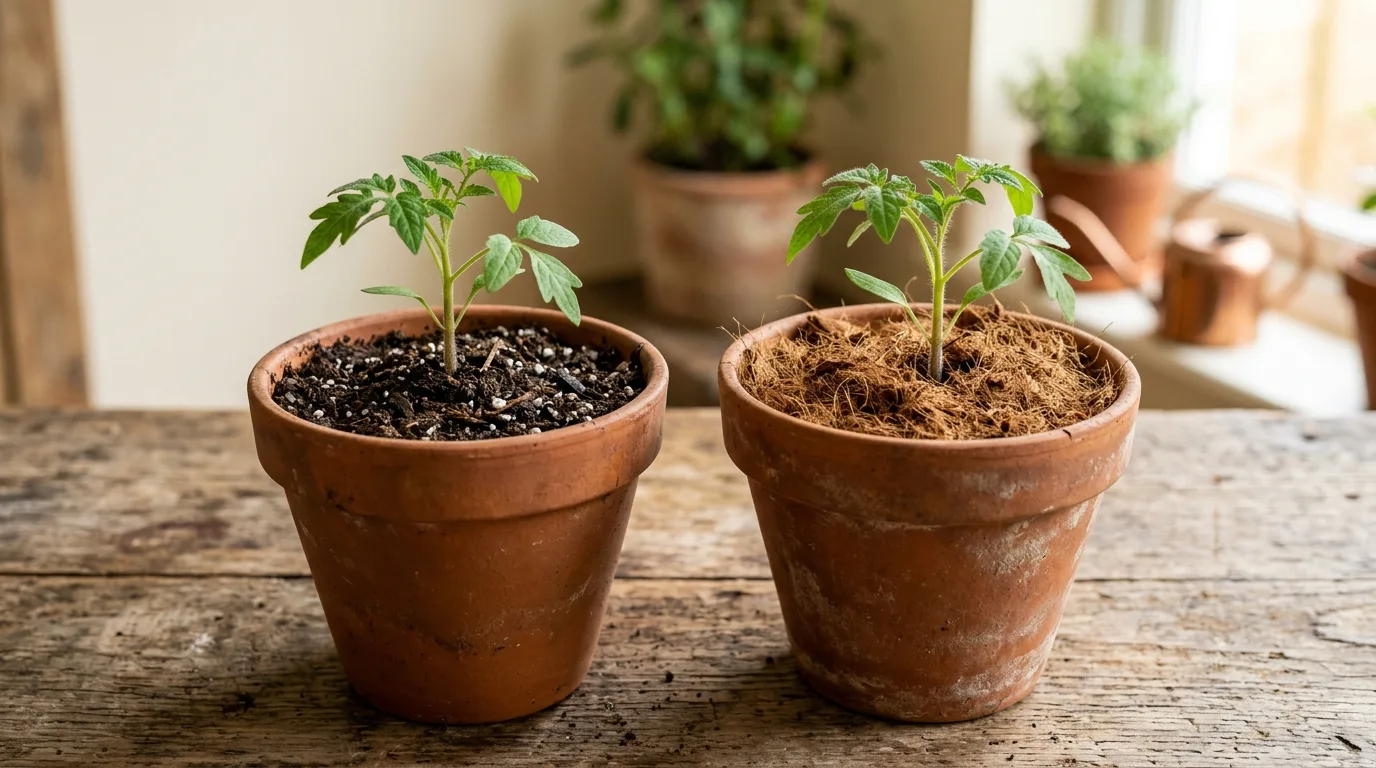
Every week we talk to growers weighing the same decision: stay with soil, or move to coco peat? Both can grow excellent crops. But they behave very differently, and understanding those differences is what separates a smooth transition from a frustrating season.
Water: the biggest difference
Soil holds water unevenly — clay pockets stay wet, sandy patches dry out, and roots chase the moisture. Coco peat holds up to eight or nine times its weight in water and releases it evenly, while its fiber structure keeps roughly 20–30% air space even when saturated. Roots get water and oxygen at the same time, which is why coir-grown root systems look so dramatically healthier.
The flip side: coco peat drains and dries faster than heavy soil. Growers switching from soil usually need to irrigate a little more frequently, in smaller doses. Drip systems and coir are a natural pair.
Nutrition: blank slate vs. lottery
Field soil comes with whatever nutrition — and whatever problems — the land carries. Coco peat is close to inert: very low in nutrients, slightly acidic (pH 5.5–6.5), and predictable. You feed the crop exactly what it needs, when it needs it.
Two things to know. First, unbuffered coir naturally holds potassium and sodium on its exchange sites and will grab calcium and magnesium from your feed early on — this is why buffered coir exists, and why serious growers specify it for salt-sensitive crops. Second, because coir starts empty, your fertiliser programme matters from day one. That is a feature, not a bug: it is what makes coir-grown crops so repeatable.
Disease and pests
Soil carries pathogens, weed seeds, and insect larvae. Properly processed coco peat is essentially free of them — no fusarium history, no weed bank, no fungus gnat larvae hitching a ride. For nurseries, this alone often justifies the switch: losses at the propagation stage collapse when the media is clean.
Sustainability
Peat moss is mined from bogs that took millennia to form. Coco peat is a by-product of the coconut industry — the husk was already there; using it simply keeps it out of the waste stream. If your market cares about sustainability credentials (and increasingly, every market does), coir is the easy answer.
Cost: look at the whole season
Per litre, coco peat costs more than digging soil out of the ground. But count the whole picture — reduced disease losses, faster cycles, better uniformity, less water, reusability across two or three crops — and coir usually wins on cost per saleable plant. It is why virtually every modern hydroponic tomato, cucumber, and strawberry operation in the world grows on coir slabs.
The bottom line
If you grow in open fields at broad-acre scale, soil is your medium. For anything in a container, greenhouse, polytunnel, or nursery — coco peat gives you control, cleanliness, and consistency soil cannot match. Start with a trial batch, adjust your irrigation and feeding, and judge the roots at the end of the cycle. They will make the argument for us.
Have questions about matching a coir grade to your crop? Get in touch — we help growers make this transition every month.